CS50 Problem Set 9: Flask Web 应用开发实战
Week 9 Problem Set 概述
本周的作业让我们将所学的 Flask 知识应用到实际项目中,包含两个项目:
| 项目 | 难度 | 核心技术 |
|---|---|---|
| Birthdays | ⭐⭐ | Flask 基础、表单处理、SQL CRUD |
| Finance | ⭐⭐⭐⭐⭐ | 完整 Web 应用、Session、API 调用、数据库设计 |
📚 前置知识回顾:Week 9 Flask 课程笔记
1. Birthdays(生日记录应用)
实现一个 Web 应用,用于记录朋友的生日。
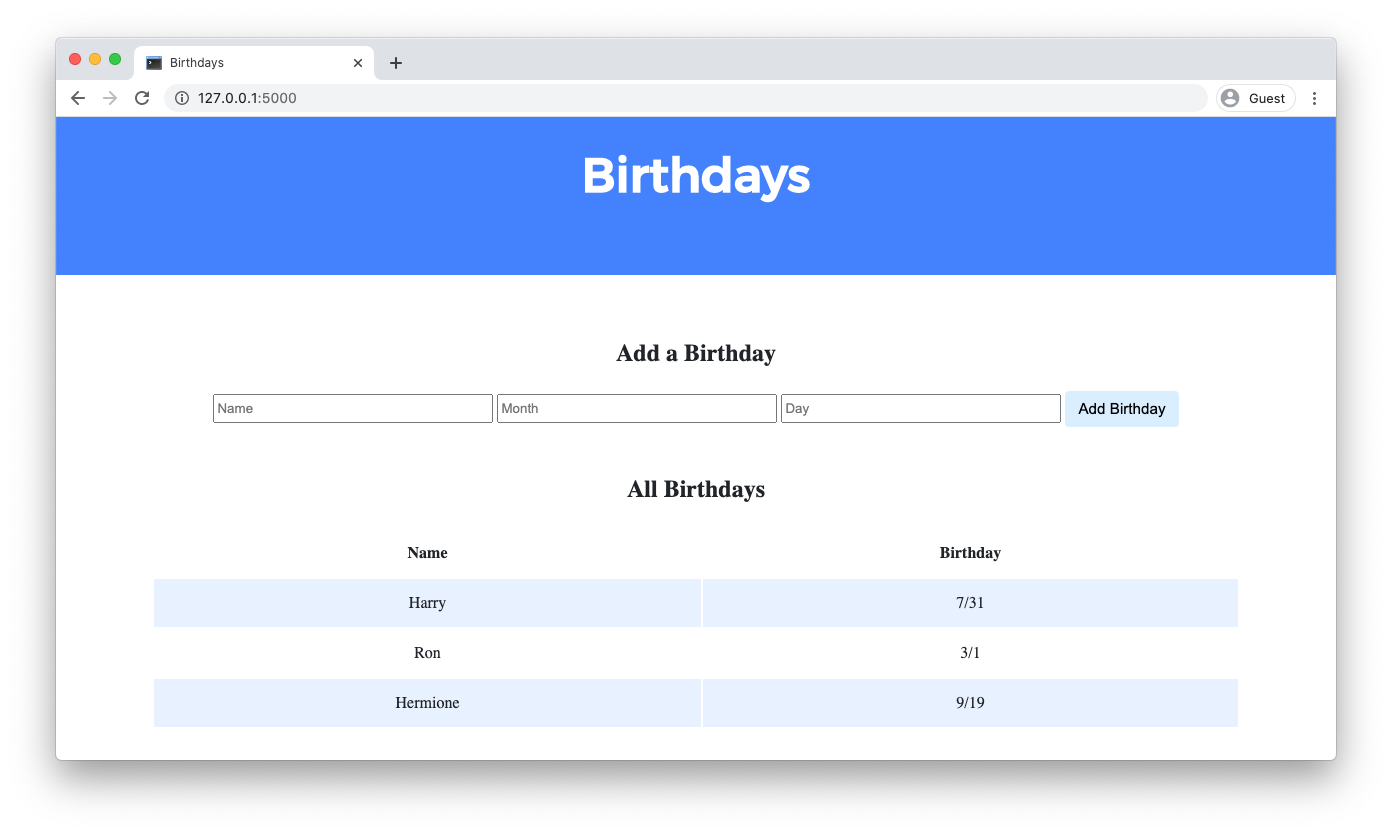
项目结构
birthdays/
├── app.py              # Flask 应用主程序
├── birthdays.db        # SQLite 数据库
├── static/
│   └── styles.css      # 样式文件
└── templates/
    └── index.html      # 主页模板
数据库结构
sqlite3 birthdays.db
sqlite> .schema
CREATE TABLE birthdays (
    id INTEGER,
    name TEXT,
    month INTEGER,
    day INTEGER,
    PRIMARY KEY(id)
);
任务分析
课程已提供代码框架,我们需要完成:
| 请求类型 | 任务描述 |
|---|---|
GET / |
从数据库查询所有生日,以表格形式显示 |
POST / |
接收表单数据,添加新生日到数据库 |
可选任务:
- 添加删除/编辑生日条目的功能
- 添加任何你想添加的功能
分步实现
Step 1: 创建表单(前端)
首先,我们需要在 index.html 中创建一个表单,让用户输入生日信息:
<form action="/" method="post">
    <input name="name" placeholder="Name" type="text" required>
    <input name="month" placeholder="Month" type="number" min="1" max="12" required>
    <input name="day" placeholder="Day" type="number" min="1" max="31" required>
    <input type="submit" value="Add Birthday">
</form>
表单属性说明:
| 属性 | 说明 |
|---|---|
action="/" |
表单提交到根路由 |
method="post" |
使用 POST 方法提交 |
min/max |
客户端验证,限制输入范围 |
required |
必填字段 |
Step 2: 处理 POST 请求(后端)
在 app.py 中处理用户提交的数据:
if request.method == "POST":
    # 1. 获取表单数据
    name = request.form.get("name")
    month = request.form.get("month")
    day = request.form.get("day")

    # 2. 插入数据库
    db.execute("INSERT INTO birthdays (name, month, day) VALUES(?, ?, ?)",
               name, month, day)

    # 3. 重定向到首页
    return redirect("/")
Step 3: 处理 GET 请求(后端)
查询所有生日并传递给模板:
else:  # GET 请求
    # 查询所有生日
    birthdays = db.execute("SELECT * FROM birthdays")
    return render_template("index.html", birthdays=birthdays)
Step 4: 显示生日列表(前端)
在 index.html 中使用 Jinja2 遍历并显示生日:
<tbody>
    { % for birthday in birthdays % }
        <tr>
            <td>{ { birthday.name } }</td>
            <td>{ { birthday.month } }/{ { birthday.day } }</td>
        </tr>
    { % endfor % }
</tbody>
完整代码(带数据验证)
app.py
import os
from cs50 import SQL
from flask import Flask, redirect, render_template, request

# 配置应用
app = Flask(__name__)

# 确保模板自动重载
app.config["TEMPLATES_AUTO_RELOAD"] = True

# 配置数据库
db = SQL("sqlite:///birthdays.db")


@app.after_request
def after_request(response):
    """禁用缓存"""
    response.headers["Cache-Control"] = "no-cache, no-store, must-revalidate"
    response.headers["Expires"] = 0
    response.headers["Pragma"] = "no-cache"
    return response


@app.route("/", methods=["GET", "POST"])
def index():
    if request.method == "POST":
        # 获取表单数据
        name = request.form.get("name")
        month = request.form.get("month")
        day = request.form.get("day")

        # ===== 数据验证 =====
        # 验证 name 不为空
        if not name or not name.strip():
            return render_template("error.html", message="Name cannot be empty")

        # 验证 month 和 day 存在
        if not month or not day:
            return render_template("error.html", message="Month and day are required")

        # 转换为整数并验证
        try:
            month = int(month)
            day = int(day)
        except ValueError:
            return render_template("error.html", message="Month and day must be numbers")

        # 验证范围
        if month < 1 or month > 12:
            return render_template("error.html", message="Month must be between 1 and 12")

        # 更严格的日期验证
        days_in_month = {
            1: 31, 2: 29, 3: 31, 4: 30, 5: 31, 6: 30,
            7: 31, 8: 31, 9: 30, 10: 31, 11: 30, 12: 31
        }
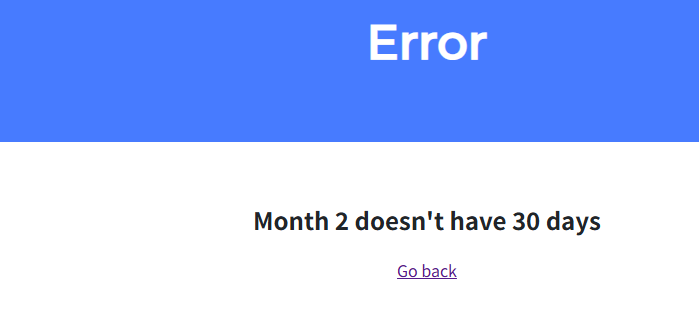
        if day < 1 or day > days_in_month[month]:
            return render_template("error.html",
                                   message=f"Month {month} doesn't have {day} days")

        # 清理数据并插入数据库
        name = name.strip()
        db.execute("INSERT INTO birthdays (name, month, day) VALUES (?, ?, ?)",
                   name, month, day)

        return redirect("/")

    else:  # GET 请求
        birthdays = db.execute("SELECT * FROM birthdays")
        return render_template("index.html", birthdays=birthdays)
templates/error.html
<!DOCTYPE html>
<html lang="en">
    <head>
        <link href="https://fonts.googleapis.com/css2?family=Montserrat:wght@500&display=swap" rel="stylesheet">
        <link href="/static/styles.css" rel="stylesheet">
        <title>Error</title>
    </head>
    <body>
        <div class="header">
            <h1>Error</h1>
        </div>
        <div class="container">
            <div class="section">
                <h2>{ { message } }</h2>
                <p><a href="/">Go back</a></p>
            </div>
        </div>
    </body>
</html>
测试演示
1. 查看初始数据
运行 flask run,浏览器打开页面:
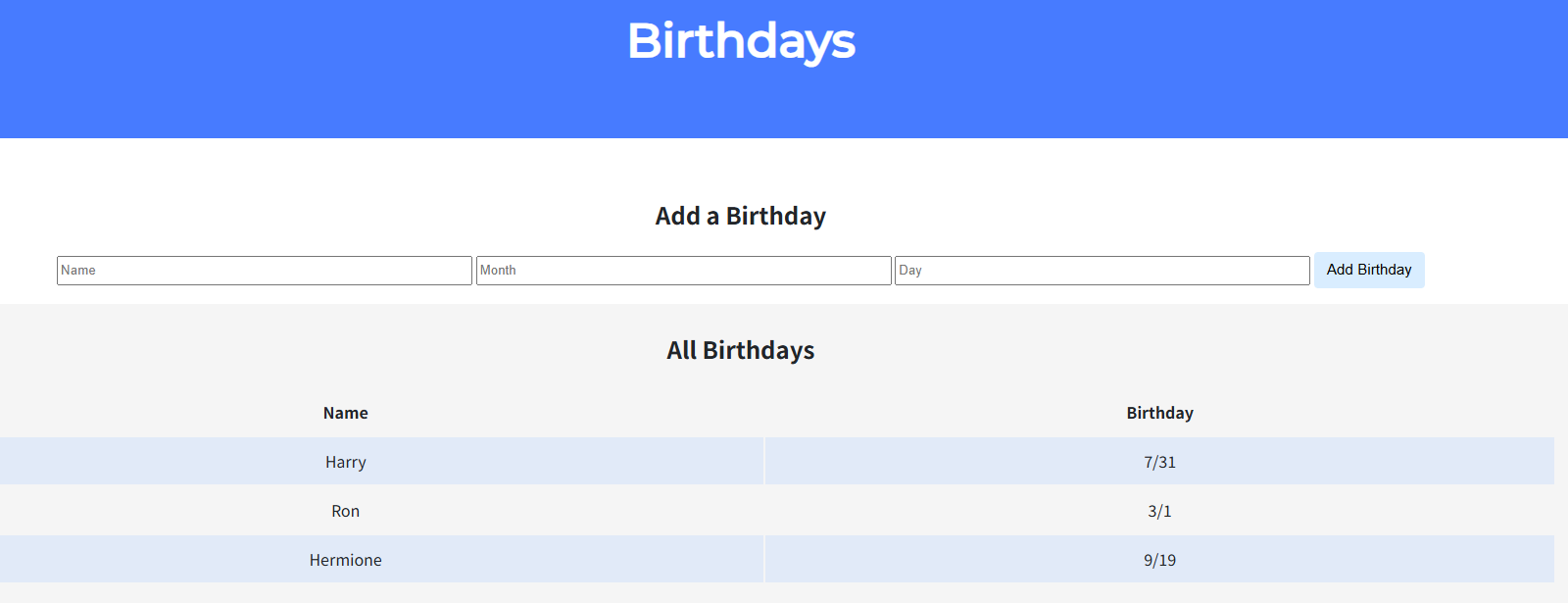
查询数据库确认有三条数据:
SELECT * FROM birthdays;
2. 添加新生日
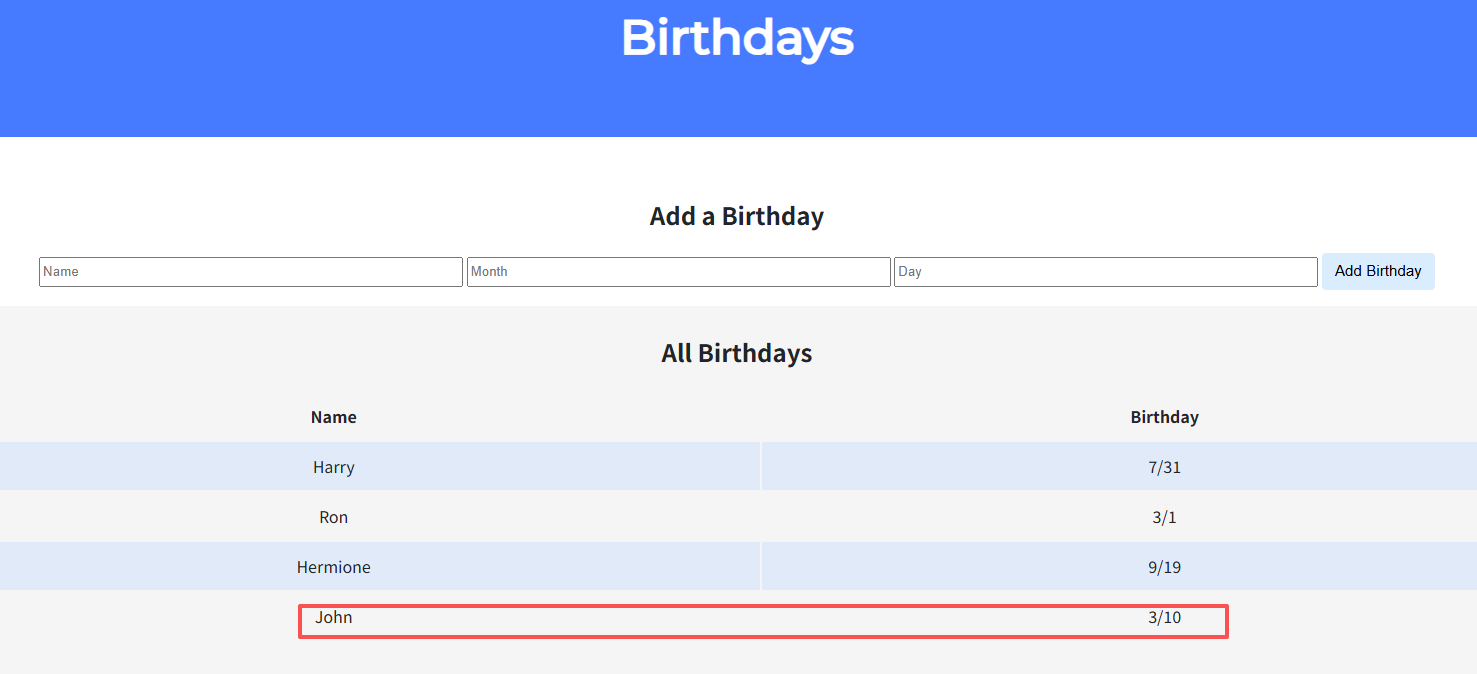
验证数据库:
SELECT * FROM birthdays WHERE name = 'John';
+----+------+-------+-----+
| id | name | month | day |
+----+------+-------+-----+
| 4  | John | 3     | 10  |
+----+------+-------+-----+
3. 测试错误处理
输入非法数据时,显示错误提示:
2. Finance(股票交易模拟平台)
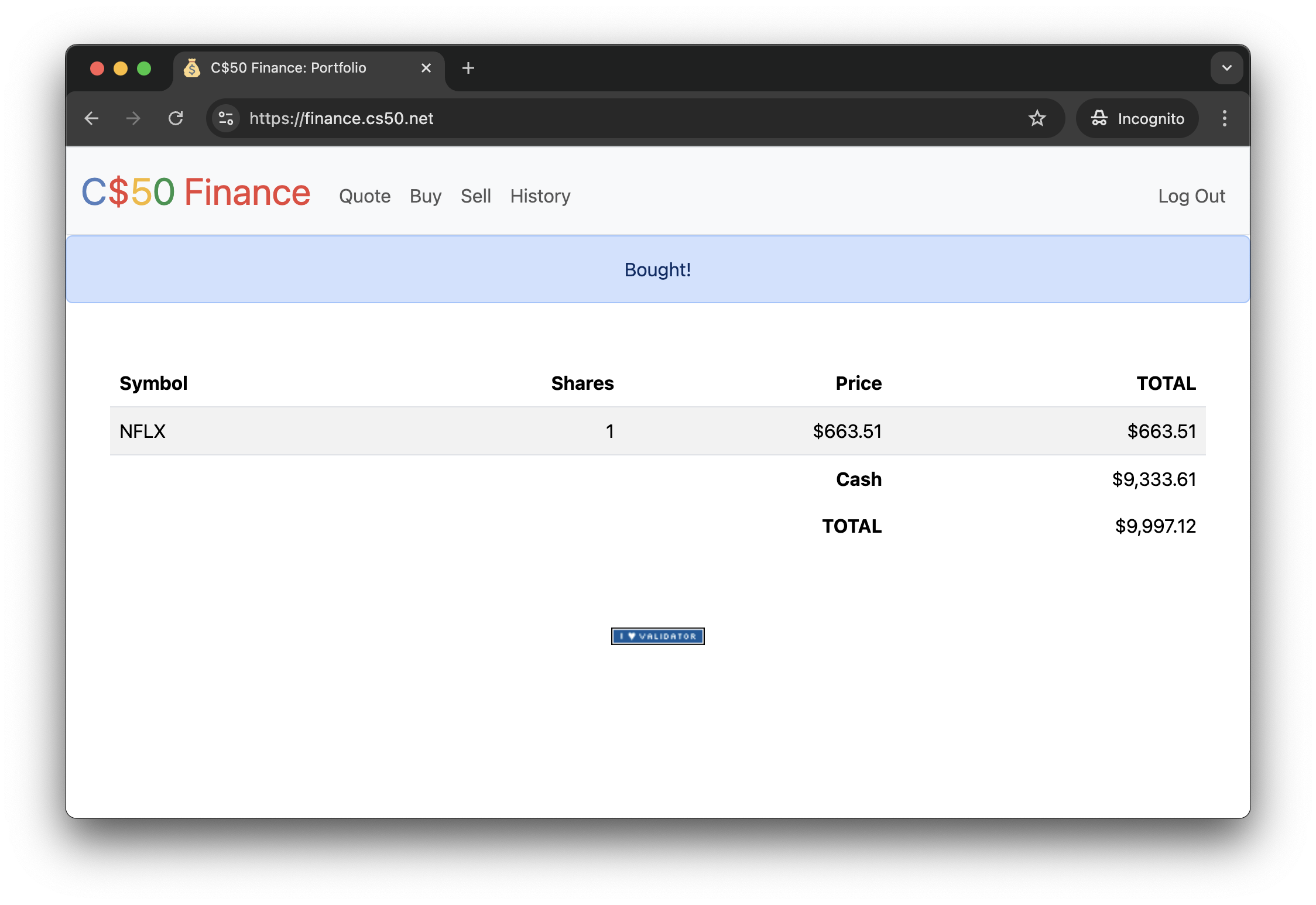
实现一个网站,用户可以通过该网站”购买”和”出售”股票。
项目背景
如果你不太清楚买卖股票是什么意思,可以参考 Investopedia 教程。
这是本周最复杂的项目,涵盖了 Web 开发的核心技能:
- 用户认证(注册/登录)
- 数据库设计与操作
- API 调用
- Session 管理
- 表单验证
项目结构
finance/
├── app.py              # Flask 应用主程序
├── finance.db          # SQLite 数据库
├── helpers.py          # 辅助函数
├── requirements.txt    # 依赖列表
├── static/
│   ├── favicon.ico
│   ├── I_heart_validator.png
│   └── styles.css
└── templates/
    ├── apology.html    # 错误页面
    ├── layout.html     # 布局模板
    └── login.html      # 登录页面
现有数据库结构
sqlite3 finance.db
sqlite> .schema
CREATE TABLE users (
    id INTEGER PRIMARY KEY AUTOINCREMENT NOT NULL,
    username TEXT NOT NULL,
    hash TEXT NOT NULL,
    cash NUMERIC NOT NULL DEFAULT 10000.00
);
CREATE UNIQUE INDEX username ON users (username);
注意:每个新用户默认拥有 $10,000 现金!
一、理解现有架构
在写代码之前,先理解项目提供的文件:
app.py 中已实现的功能
| 路由 | 状态 | 说明 |
|---|---|---|
/login |
✅ 已实现 | 用户登录 |
/logout |
✅ 已实现 | 用户登出 |
/register |
❌ 待实现 | 用户注册 |
/quote |
❌ 待实现 | 查询股票价格 |
/buy |
❌ 待实现 | 买入股票 |
/sell |
❌ 待实现 | 卖出股票 |
/ |
❌ 待实现 | 首页/投资组合 |
/history |
❌ 待实现 | 交易历史 |
helpers.py 提供的函数
def apology(message, code=400):
    """渲染错误页面"""
    # 用于显示错误信息给用户

def login_required(f):
    """装饰器:要求用户登录"""
    # 保护需要登录才能访问的路由

def lookup(symbol):
    """查询股票价格"""
    # 输入: "AAPL" (股票代码)
    # 输出: {"name": "Apple Inc.", "price": 150.25, "symbol": "AAPL"}
    # 如果找不到返回 None

def usd(value):
    """格式化为美元"""
    # 输入: 1234.56
    # 输出: "$1,234.56"
二、设计数据库
现有的 users 表只能存储用户信息,我们需要一张新表来记录交易。
创建 transactions 表
CREATE TABLE transactions (
    id INTEGER PRIMARY KEY AUTOINCREMENT,
    user_id INTEGER NOT NULL,
    symbol TEXT NOT NULL,
    shares INTEGER NOT NULL,
    price NUMERIC NOT NULL,
    transacted_timestamp DATETIME DEFAULT CURRENT_TIMESTAMP,
    FOREIGN KEY(user_id) REFERENCES users(id)
);
字段说明:
| 字段 | 类型 | 说明 |
|---|---|---|
id |
INTEGER | 交易记录唯一编号 |
user_id |
INTEGER | 关联 users 表 |
symbol |
TEXT | 股票代码(如 AAPL) |
shares |
INTEGER | 股数(买入为正,卖出为负) |
price |
NUMERIC | 成交单价 |
transacted_timestamp |
DATETIME | 交易时间 |
创建索引(提高查询速度)
CREATE INDEX idx_user_transactions ON transactions(user_id);
CREATE INDEX idx_user_symbol ON transactions(user_id, symbol);
三、实现注册功能(register)
前端:templates/register.html
{ % extends "layout.html" % }

{ % block title % }
    Register
{ % endblock % }

{ % block main % }
    <form action="/register" method="post">
        <div class="mb-3">
            <input autocomplete="off" autofocus class="form-control mx-auto w-auto"
                   name="username" placeholder="Username" type="text" required>
        </div>
        <div class="mb-3">
            <input class="form-control mx-auto w-auto"
                   name="password" placeholder="Password" type="password" required>
        </div>
        <div class="mb-3">
            <input class="form-control mx-auto w-auto"
                   name="confirmation" placeholder="Confirm Password" type="password" required>
        </div>
        <button class="btn btn-primary" type="submit">Register</button>
    </form>
{ % endblock % }
后端:app.py
@app.route("/register", methods=["GET", "POST"])
def register():
    """Register user"""

    if request.method == "POST":
        username = request.form.get("username")
        password = request.form.get("password")
        confirmation = request.form.get("confirmation")

        # 验证输入
        if not username:
            return apology("must provide username", 400)
        if not password:
            return apology("must provide password", 400)
        if not confirmation:
            return apology("must confirm password", 400)

        # 验证密码匹配
        if password != confirmation:
            return apology("passwords do not match", 400)

        # 检查用户名是否已存在
        existing = db.execute("SELECT * FROM users WHERE username = ?", username)
        if existing:
            return apology("username already taken", 400)

        # 哈希密码并插入数据库
        hash_password = generate_password_hash(password)
        result = db.execute("INSERT INTO users (username, hash) VALUES (?, ?)",
                           username, hash_password)

        # 自动登录新用户
        session["user_id"] = result

        return redirect("/")

    else:  # GET 请求
        return render_template("register.html")
⚠️ 安全提示:永远不要存储明文密码!使用
generate_password_hash()进行哈希。
测试注册功能
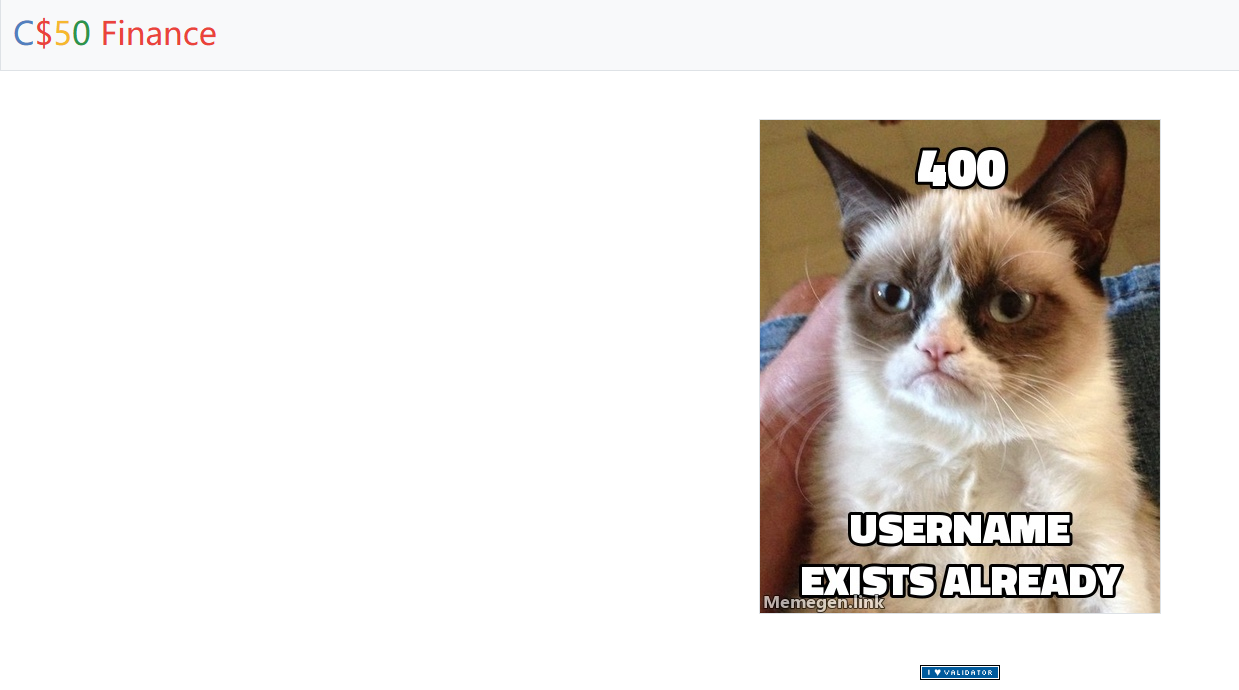
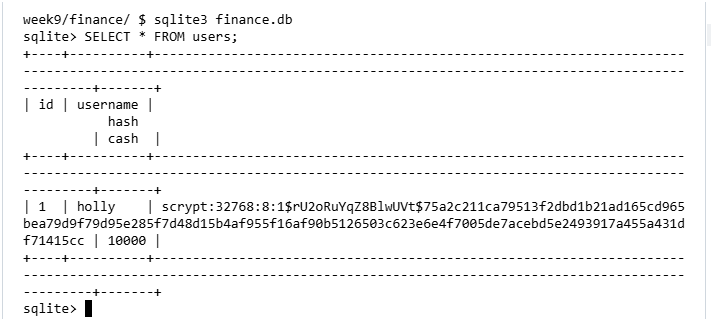
验证数据库:
SELECT id, username, cash FROM users;
四、实现查价功能(quote)
这是最简单的业务功能。
前端:templates/quote.html
{ % extends "layout.html" % }

{ % block title % }
    Quote
{ % endblock % }

{ % block main % }
    <form action="/quote" method="post">
        <div class="mb-3">
            <input autocomplete="off" autofocus class="form-control mx-auto w-auto"
                   name="symbol" placeholder="Symbol" type="text" required>
        </div>
        <button class="btn btn-primary" type="submit">Quote</button>
    </form>
{ % endblock % }
前端:templates/quoted.html
{ % extends "layout.html" % }

{ % block title % }
    Quoted
{ % endblock % }

{ % block main % }
    <h2>Stock Quote</h2>
    <p>
        A share of <strong>{ { stock.name } }</strong> ({ { stock.symbol } })
        costs <strong>{ { stock.price | usd } }</strong>.
    </p>
    <a href="/quote" class="btn btn-secondary">Quote Another</a>
{ % endblock % }
后端:app.py
@app.route("/quote", methods=["GET", "POST"])
@login_required
def quote():
    """Get stock quote"""

    if request.method == "POST":
        symbol = request.form.get("symbol")

        if not symbol:
            return apology("must provide symbol", 400)

        # 调用 API 查询股票
        stock = lookup(symbol.upper())

        if stock is None:
            return apology("invalid symbol", 400)

        return render_template("quoted.html", stock=stock)

    else:
        return render_template("quote.html")
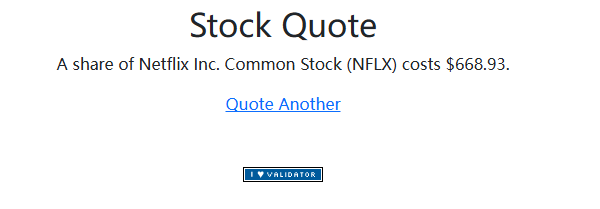
测试查价功能
五、实现买入功能(buy)
这是逻辑最复杂的功能,涉及资金和股票的流转。
业务流程
用户输入 symbol + shares
         ↓
    验证输入合法性
         ↓
    查询股票当前价格
         ↓
    计算总花费 = price × shares
         ↓
    查询用户余额
         ↓
    余额够吗? ─── 否 ──→ 返回错误
         │
        是
         ↓
    扣除用户余额(UPDATE users)
         ↓
    记录交易(INSERT transactions)
         ↓
    重定向到首页
前端:templates/buy.html
{ % extends "layout.html" % }

{ % block title % }
    Buy
{ % endblock % }

{ % block main % }
    <form action="/buy" method="post">
        <div class="mb-3">
            <input autocomplete="off" autofocus class="form-control mx-auto w-auto"
                   name="symbol" placeholder="Symbol" type="text" required>
        </div>
        <div class="mb-3">
            <input class="form-control mx-auto w-auto"
                   min="1" name="shares" placeholder="Shares" type="number" required>
        </div>
        <button class="btn btn-primary" type="submit">Buy</button>
    </form>
{ % endblock % }
后端:app.py
@app.route("/buy", methods=["GET", "POST"])
@login_required
def buy():
    """Buy shares of stock"""

    if request.method == "POST":
        symbol = request.form.get("symbol")
        shares = request.form.get("shares")

        # ===== 验证输入 =====
        if not symbol:
            return apology("must provide symbol", 400)
        if not shares:
            return apology("must provide shares", 400)

        # 验证 shares 是正整数
        try:
            shares = int(shares)
            if shares <= 0:
                return apology("shares must be positive", 400)
        except ValueError:
            return apology("shares must be a positive integer", 400)

        # ===== 查询股票 =====
        stock = lookup(symbol.upper())
        if stock is None:
            return apology("invalid symbol", 400)

        # ===== 计算总花费 =====
        total_cost = shares * stock["price"]

        # ===== 检查余额 =====
        user = db.execute("SELECT cash FROM users WHERE id = ?", session["user_id"])
        cash = user[0]["cash"]

        if cash < total_cost:
            return apology("can't afford", 400)

        # ===== 执行交易 =====
        # 1. 扣除用户余额
        db.execute("UPDATE users SET cash = cash - ? WHERE id = ?",
                   total_cost, session["user_id"])

        # 2. 记录交易(注意:user_id 字段名)
        db.execute("""
            INSERT INTO transactions (user_id, symbol, shares, price)
            VALUES (?, ?, ?, ?)
        """, session["user_id"], stock["symbol"], shares, stock["price"])

        # 提示成功
        flash(f"Bought {shares} shares of {stock['symbol']} for {usd(total_cost)}!")
        return redirect("/")

    else:
        return render_template("buy.html")
测试买入功能
余额不足时:
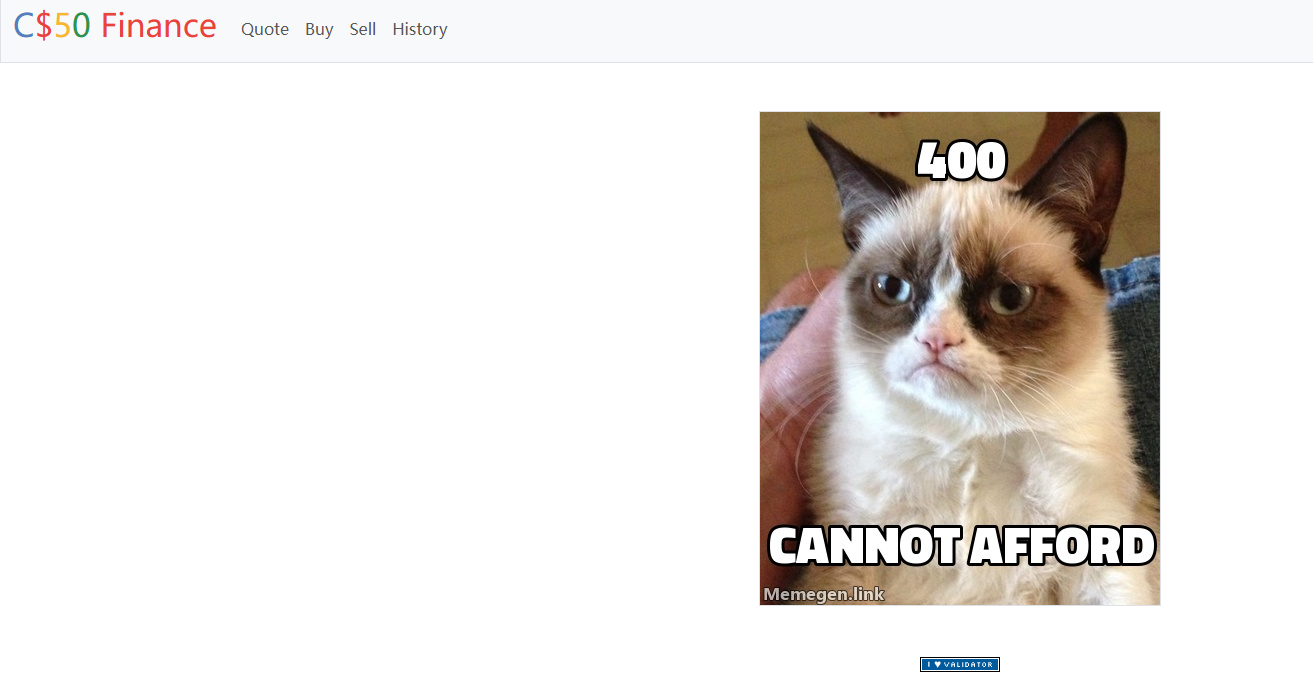
购买成功:
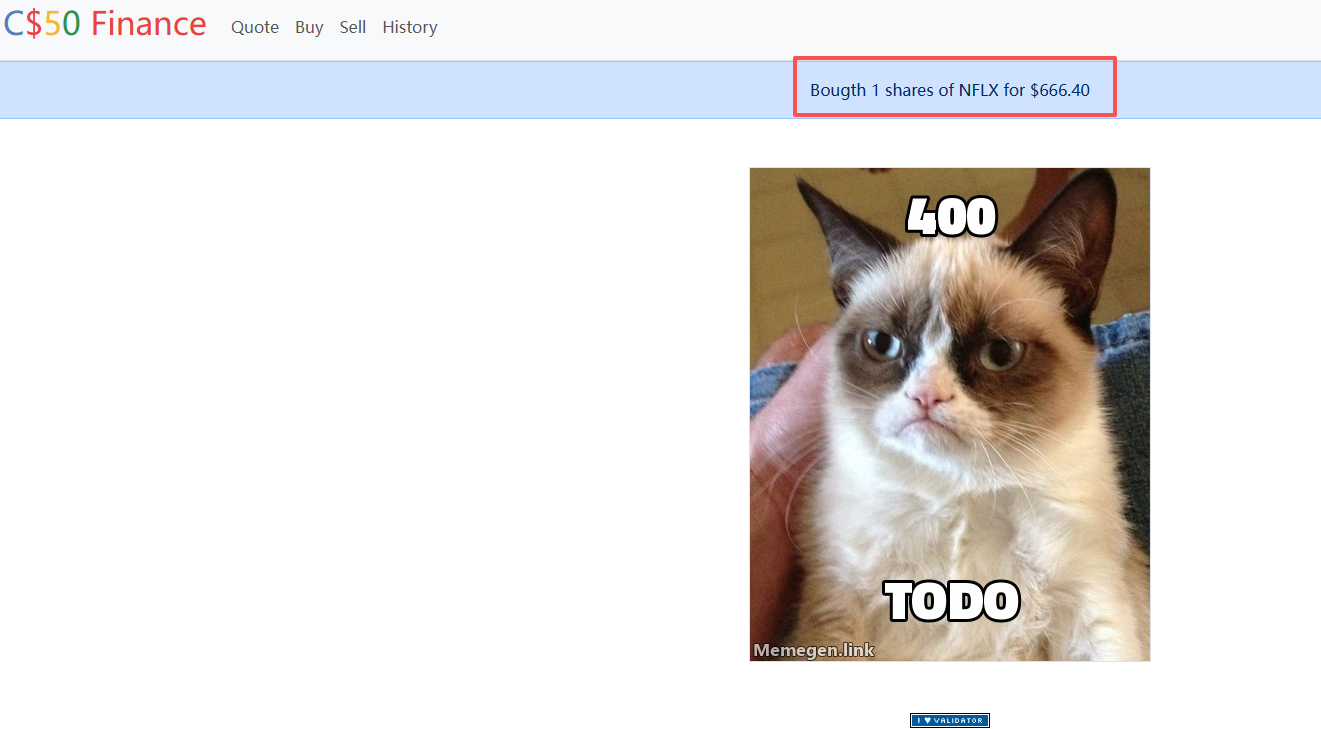
六、实现首页/投资组合(index)
首页需要展示用户的”投资组合”:持有多少股票?当前市值是多少?
难点:数据聚合
数据库 transactions 存的是流水账(买 +10,买 +5,卖 -3),需要聚合计算:
SELECT symbol, SUM(shares) as total_shares
FROM transactions
WHERE user_id = ?
GROUP BY symbol
HAVING SUM(shares) > 0
SQL 说明:
SUM(shares):自动处理买入(正)和卖出(负)的抵消HAVING SUM(shares) > 0:过滤掉已卖光的股票
后端:app.py
@app.route("/")
@login_required
def index():
    """Show portfolio of stocks"""

    # 查询用户持有的股票
    portfolio = db.execute("""
        SELECT symbol, SUM(shares) as total_shares
        FROM transactions
        WHERE user_id = ?
        GROUP BY symbol
        HAVING SUM(shares) > 0
    """, session["user_id"])

    # 查询用户余额
    user = db.execute("SELECT cash FROM users WHERE id = ?", session["user_id"])
    cash = user[0]["cash"]

    # 计算总资产
    total_value = cash

    for stock in portfolio:
        # 查询当前价格
        quote = lookup(stock["symbol"])
        stock["name"] = quote["name"]
        stock["price"] = quote["price"]
        stock["total"] = stock["price"] * stock["total_shares"]
        total_value += stock["total"]

    return render_template("index.html",
                          portfolio=portfolio,
                          cash=cash,
                          total_value=total_value)
前端:templates/index.html
{ % extends "layout.html" % }

{ % block title % }
    Portfolio
{ % endblock % }

{ % block main % }
    <h2>Portfolio</h2>
    <table class="table table-striped">
        <thead>
            <tr>
                <th>Symbol</th>
                <th>Name</th>
                <th>Shares</th>
                <th>Price</th>
                <th>Total</th>
            </tr>
        </thead>
        <tbody>
            { % for stock in portfolio % }
            <tr>
                <td>{ { stock.symbol } }</td>
                <td>{ { stock.name } }</td>
                <td>{ { stock.total_shares } }</td>
                <td>{ { stock.price | usd } }</td>
                <td>{ { stock.total | usd } }</td>
            </tr>
            { % endfor % }
        </tbody>
        <tfoot>
            <tr>
                <td colspan="4"><strong>Cash</strong></td>
                <td>{ { cash | usd } }</td>
            </tr>
            <tr>
                <td colspan="4"><strong>TOTAL</strong></td>
                <td><strong>{ { total_value | usd } }</strong></td>
            </tr>
        </tfoot>
    </table>
{ % endblock % }
效果展示

七、实现卖出功能(sell)
逻辑和 buy 类似,但方向相反。
前端:templates/sell.html
使用下拉菜单显示用户持有的股票:
{ % extends "layout.html" % }

{ % block title % }
    Sell
{ % endblock % }

{ % block main % }
    <form action="/sell" method="post">
        <div class="mb-3">
            <select class="form-select mx-auto w-auto" name="symbol" required>
                <option disabled selected value="">Symbol</option>
                { % for stock in stocks % }
                    <option value="{ { stock.symbol } }">{ { stock.symbol } }</option>
                { % endfor % }
            </select>
        </div>
        <div class="mb-3">
            <input autocomplete="off" class="form-control mx-auto w-auto"
                   min="1" name="shares" placeholder="Shares" type="number" required>
        </div>
        <button class="btn btn-primary" type="submit">Sell</button>
    </form>
{ % endblock % }
后端:app.py
@app.route("/sell", methods=["GET", "POST"])
@login_required
def sell():
    """Sell shares of stock"""

    if request.method == "POST":
        symbol = request.form.get("symbol")
        shares = request.form.get("shares")

        # 验证输入
        if not symbol:
            return apology("must select symbol", 400)
        if not shares:
            return apology("must provide shares", 400)

        try:
            shares = int(shares)
            if shares <= 0:
                return apology("shares must be positive", 400)
        except ValueError:
            return apology("shares must be a positive integer", 400)

        # 查询用户持有该股票的数量
        holdings = db.execute("""
            SELECT SUM(shares) as total_shares
            FROM transactions
            WHERE user_id = ? AND symbol = ?
        """, session["user_id"], symbol)

        # 验证用户持有该股票
        if not holdings or holdings[0]["total_shares"] is None:
            return apology("you don't own this stock", 400)

        # 验证持有数量足够
        if holdings[0]["total_shares"] < shares:
            return apology("not enough shares", 400)

        # 查询当前价格
        stock = lookup(symbol)
        if stock is None:
            return apology("invalid symbol", 400)

        # 计算收入
        total_sale = shares * stock["price"]

        # 执行交易
        # 1. 增加用户余额
        db.execute("UPDATE users SET cash = cash + ? WHERE id = ?",
                   total_sale, session["user_id"])

        # 2. 记录交易(注意:shares 为负数)
        db.execute("""
            INSERT INTO transactions (user_id, symbol, shares, price)
            VALUES (?, ?, ?, ?)
        """, session["user_id"], symbol, -shares, stock["price"])

        flash(f"Sold {shares} shares of {symbol} for {usd(total_sale)}!")
        return redirect("/")

    else:  # GET 请求
        # 获取用户持有的股票列表
        stocks = db.execute("""
            SELECT symbol
            FROM transactions
            WHERE user_id = ?
            GROUP BY symbol
            HAVING SUM(shares) > 0
        """, session["user_id"])

        return render_template("sell.html", stocks=stocks)
⚠️ 重要:卖出时,
shares必须存储为负数(-shares),这样在计算持仓时才能正确抵消。
八、实现交易历史(history)
后端:app.py
@app.route("/history")
@login_required
def history():
    """Show history of transactions"""

    transactions = db.execute("""
        SELECT symbol, shares, price, transacted_timestamp
        FROM transactions
        WHERE user_id = ?
        ORDER BY transacted_timestamp DESC
    """, session["user_id"])

    return render_template("history.html", transactions=transactions)
前端:templates/history.html
{ % extends "layout.html" % }

{ % block title % }
    History
{ % endblock % }

{ % block main % }
    <h2>Transaction History</h2>
    <table class="table table-striped">
        <thead>
            <tr>
                <th>Symbol</th>
                <th>Shares</th>
                <th>Price</th>
                <th>Transacted</th>
            </tr>
        </thead>
        <tbody>
            { % for transaction in transactions % }
            <tr>
                <td>{ { transaction.symbol } }</td>
                <td>
                    { % if transaction.shares > 0 % }
                        <span class="text-success">+{ { transaction.shares } }</span>
                    { % else % }
                        <span class="text-danger">{ { transaction.shares } }</span>
                    { % endif % }
                </td>
                <td>{ { transaction.price | usd } }</td>
                <td>{ { transaction.transacted_timestamp } }</td>
            </tr>
            { % endfor % }
        </tbody>
    </table>
{ % endblock % }
显示效果:
- 买入显示绿色
+10 - 卖出显示红色
-5
九、额外功能(Personal Touch)
1. 修改密码功能
@app.route("/change_password", methods=["GET", "POST"])
@login_required
def change_password():
    """Change user password"""

    if request.method == "POST":
        old_password = request.form.get("old_password")
        new_password = request.form.get("new_password")
        confirmation = request.form.get("confirmation")

        # 验证输入
        if not old_password or not new_password or not confirmation:
            return apology("must fill all fields", 400)

        if new_password != confirmation:
            return apology("passwords do not match", 400)

        # 验证旧密码
        user = db.execute("SELECT hash FROM users WHERE id = ?", session["user_id"])
        if not check_password_hash(user[0]["hash"], old_password):
            return apology("invalid old password", 400)

        # 更新密码
        new_hash = generate_password_hash(new_password)
        db.execute("UPDATE users SET hash = ? WHERE id = ?",
                   new_hash, session["user_id"])

        flash("Password changed successfully!")
        return redirect("/")

    else:
        return render_template("change_password.html")
2. 充值功能
@app.route("/add_cash", methods=["GET", "POST"])
@login_required
def add_cash():
    """Add cash to account"""

    if request.method == "POST":
        amount = request.form.get("amount")

        try:
            amount = float(amount)
            if amount <= 0:
                return apology("amount must be positive", 400)
        except ValueError:
            return apology("invalid amount", 400)

        # 添加现金
        db.execute("UPDATE users SET cash = cash + ? WHERE id = ?",
                   amount, session["user_id"])

        flash(f"Added {usd(amount)} to your account!")
        return redirect("/")

    else:
        return render_template("add_cash.html")
附录:理解数据库中的特殊指令
1. sqlite_sequence 表
CREATE TABLE sqlite_sequence(name, seq);
这是 SQLite 自动生成的表,用于跟踪 AUTOINCREMENT 字段的当前值。
你不需要操作它,它是数据库的”幕后工作人员”。
2. UNIQUE INDEX
CREATE UNIQUE INDEX username ON users (username);
这行代码包含两个重要概念:
| 概念 | 作用 |
|---|---|
| INDEX | 加速查询(类似书籍的索引页) |
| UNIQUE | 确保用户名不重复 |
对开发的影响:
在实现 register 功能时,有两种处理用户名重复的方式:
方式 1:主动查询(推荐新手)
existing = db.execute("SELECT * FROM users WHERE username = ?", username)
if existing:
    return apology("username already taken")
方式 2:捕获异常(更高级)
try:
    db.execute("INSERT INTO users ...", username, hash)
except:
    return apology("username already taken")
常见问题与调试技巧
1. 检查数据库变化
每次操作后,使用 SQLite 验证数据:
-- 查看用户
SELECT id, username, cash FROM users;

-- 查看交易记录
SELECT * FROM transactions ORDER BY transacted_timestamp DESC;
2. 查看 Flask 日志
Flask 会在终端输出所有 SQL 查询,方便调试:
INFO: SELECT * FROM users WHERE username = 'alice'
INFO: INSERT INTO users (username, hash) VALUES('alice', 'pbkdf2:sha256:...')
3. 常见错误
| 错误 | 原因 | 解决方案 |
|---|---|---|
NameError: name 'usd' is not defined |
未导入 usd 函数 | 在 app.py 顶部添加 from helpers import usd |
KeyError: 'user_id' |
Session 未设置 | 确保用户已登录,使用 @login_required 装饰器 |
UNIQUE constraint failed |
用户名已存在 | 在插入前检查用户名是否重复 |
总结
完成 Finance 项目后,你已经掌握了:
- ✅ Flask 路由与模板
- ✅ 表单处理与验证
- ✅ Session 管理
- ✅ 数据库 CRUD 操作
- ✅ API 调用
- ✅ 完整的 Web 应用架构
这是一个接近真实项目的综合练习,恭喜你完成!🎉
参考资料: